|
The history of Pakistan
spans from the ancient Indus Valley
Civilization to its establishment on August 14, 1947,
as an independent nation following the partition of British India.
Created as a homeland for Muslims, the country originally consisted of
two wings—West and East Pakistan—before East Pakistan seceded to become
Bangladesh in 1971.
Ancient Roots & Islamic Empires
Long before modern borders, the territory that makes up Pakistan was a
major crossroads of history.
-
Indus Valley Civilization (2500–1700 BCE):
One of the world’s oldest civilizations flourished along the Indus
River, known for its advanced urban planning in ancient sites like
Mohenjo-daro and Harappa.
-
Islamic Conquests (711 CE): The arrival of
Arab general Muhammad bin Qasim introduced Islam to the region, paving
the way for centuries of Muslim rule, which reached its zenith under
the Mughal Empire.
British Rule & the Pakistan Movement
By the mid-19th century, the British East India Company had conquered
the region. As anti-colonial movements grew, Indian Muslims under the
leadership of Muhammad Ali Jinnah formed the All-India Muslim League
in 1906. They championed the "Two-Nation Theory," arguing that Muslims
needed their own independent state to protect their political,
cultural, and religious rights from the Hindu-majority population.
Independence and 1947 Partition
On August 14, 1947, the Dominion of Pakistan was officially created as
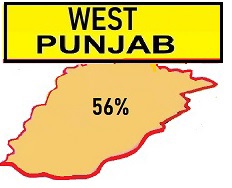
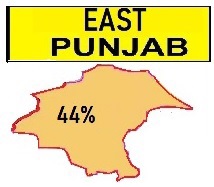
the British Empire withdrew. The hasty drawing of the border—the
Radcliffe Line—divided Punjab and Bengal. This triggered one of the
largest, most violent mass migrations in human history, as millions of
Muslims fled to Pakistan while Hindus and Sikhs fled to India.
The 1971 War and Creation of Bangladesh
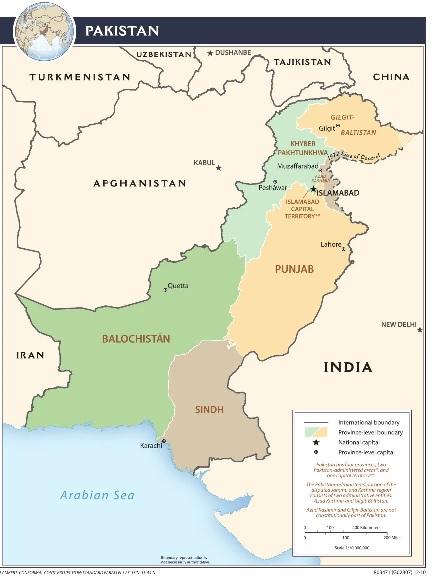
From 1947 to 1971, Pakistan consisted of two wings—West Pakistan
(modern-day Pakistan) and East Pakistan (separated by more than 1,000
miles of Indian territory). Tensions over political representation,
language, and economic disparities culminated in a severe political
crisis. Following a brutal civil war and intervention by India, East
Pakistan successfully seceded in 1971 to form the independent nation
of Bangladesh.
Political Instability and Modern Era
Pakistan’s history since independence has been heavily characterized
by political volatility, economic struggles, and the frequent
alternation between civilian democratic governments and military rule.
-
Military Interventions: The country has
experienced multiple military coups, with leaders like Ayub Khan,
Zia-ul-Haq, and Pervez Musharraf holding power for extended periods.
-
Democratic Milestones: The 21st century has
seen ongoing struggles with political stability and navigating
dynastic politics, economic crises, and significant security
challenges.
-
Geopolitics: Pakistan has played a major
global role, particularly through its involvement in conflicts over
the disputed region of Kashmir and as a frontline state in the
decades-long international conflicts in neighboring Afghanistan.
|