|
Following its independence and tragic partition in 1947,
India transformed from a newly formed nation
into the world’s largest democracy and a modern global powerhouse.
Its post-1947 trajectory spans from nation-building and agrarian
revolutions to digital and economic transformation.
Key milestones defining India's history after 1947 include:
1. The Early Years and Nation Building (1947–1960s)
-
Integration of Princely States: The new
government faced the monumental task of uniting over 562 independent
princely states into the Indian Union.
-
The Constitution: The Indian Constituent
Assembly adopted the
Constitution of India
in 1949, taking effect in 1950 and establishing the nation as a
sovereign, secular, and democratic republic.,
-
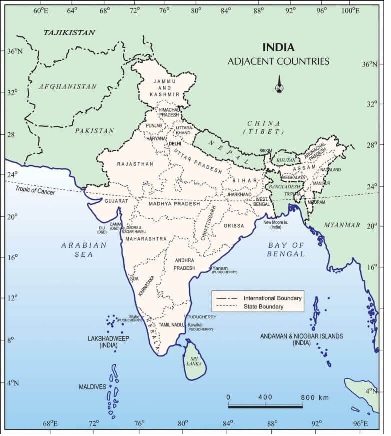
Territorial Reorganization: The
States Reorganization Act of 1956 redrew state
boundaries primarily along linguistic lines to promote administrative
cohesion.
-
Early Conflicts: Tensions over the princely
state of Jammu and Kashmir led to the first Indo-Pakistani War in
1947–1948.
2. Economic and Agricultural Revolutions
-
Green and White Revolutions: Starting in the
1960s, India implemented the Green Revolution to achieve food security
and eliminate dependency on grain imports, while the White Revolution
spurred a massive boost in dairy production.
-
1991 Economic Reforms: Facing a severe
balance-of-payments crisis, India abandoned its socialist,
state-controlled economic model. The government introduced sweeping
liberalization, privatization, and globalization policies that rapidly
expanded its middle class and opened global markets.
3. Geopolitics and Security
-
Wars and Defense: India fought several border
conflicts, most notably the Sino-Indian War in 1962 and the
Indo-Pakistani Wars of 1965 and 1971 (which resulted in the creation of
Bangladesh).
-
Nuclear Capabilities: India achieved nuclear
power status following its first tests in 1974 and further tests in
1998.
-
Space Exploration: The
Indian Space Research Organisation (ISRO)
grew from humble beginnings into a world-class space agency, executing
successful lunar and Mars missions.
4. Technological and Digital Era
-
Tech Powerhouse: The establishment of
institutions like the
Indian Institutes of Technology (IITs)
laid the groundwork for India's booming software and IT sector.
-
Digital India: Innovations like the
Unified Payments Interface (UPI) modernized the
economy, making India one of the global leaders in real-time digital
payments.
5. Social & Political Evolution
-
India has maintained a vibrant democratic tradition, experiencing
transitions of power across various political coalitions, from the long
dominance of the Indian National Congress to the rise of regional
parties and modern national governance.
-
The country's history and ongoing evolution as a republic are documented
in depth via
Wikipedia's History of India (1947–present)
and
BYJU'S India After Independence Timeline.
|